Are you building the life you actually want?
A few weeks ago, my business partner and I were exploring a consequential opportunity for the future of wHealth Advisors.
The proposed partnership offered greater scale, additional resources, and the potential to build something considerably larger than what exists today.
On paper, plenty to like.
In practice, it meant weeks of negotiations, financial modeling, competing priorities, and proposals.
One night, I stayed up until midnight working on a counterproposal. By 4 a.m., I was back at it.
A few hours later, I helped pack the boys into the car, kissed everyone goodbye, and watched Arabelle drive off to school.
I walked back into the house and, seemingly out of nowhere, had a moment of complete clarity:
I don’t want this.
Not because the opportunity lacked merit. But because the responsibilities, complications, and trajectory it would likely set me on weren’t aligned with the life I’d been working to build.
The irony wasn’t lost on me.
If I were optimizing exclusively for money, I probably shouldn’t have ever left Goldman Sachs.
There was a relatively predictable career trajectory ahead of me. I can see where many of my former colleagues are today, and while I haven’t audited their personal balance sheets, I’m reasonably confident they’re considerably further along financially.
But I didn’t leave any of my former employers because I thought entrepreneurship was the fastest route to a bigger net worth.
I wanted autonomy. Ownership over my time. The freedom to build a business around a philosophy I believed in, rather than arrange my life around a business.
Which brings me to Wednesdays.
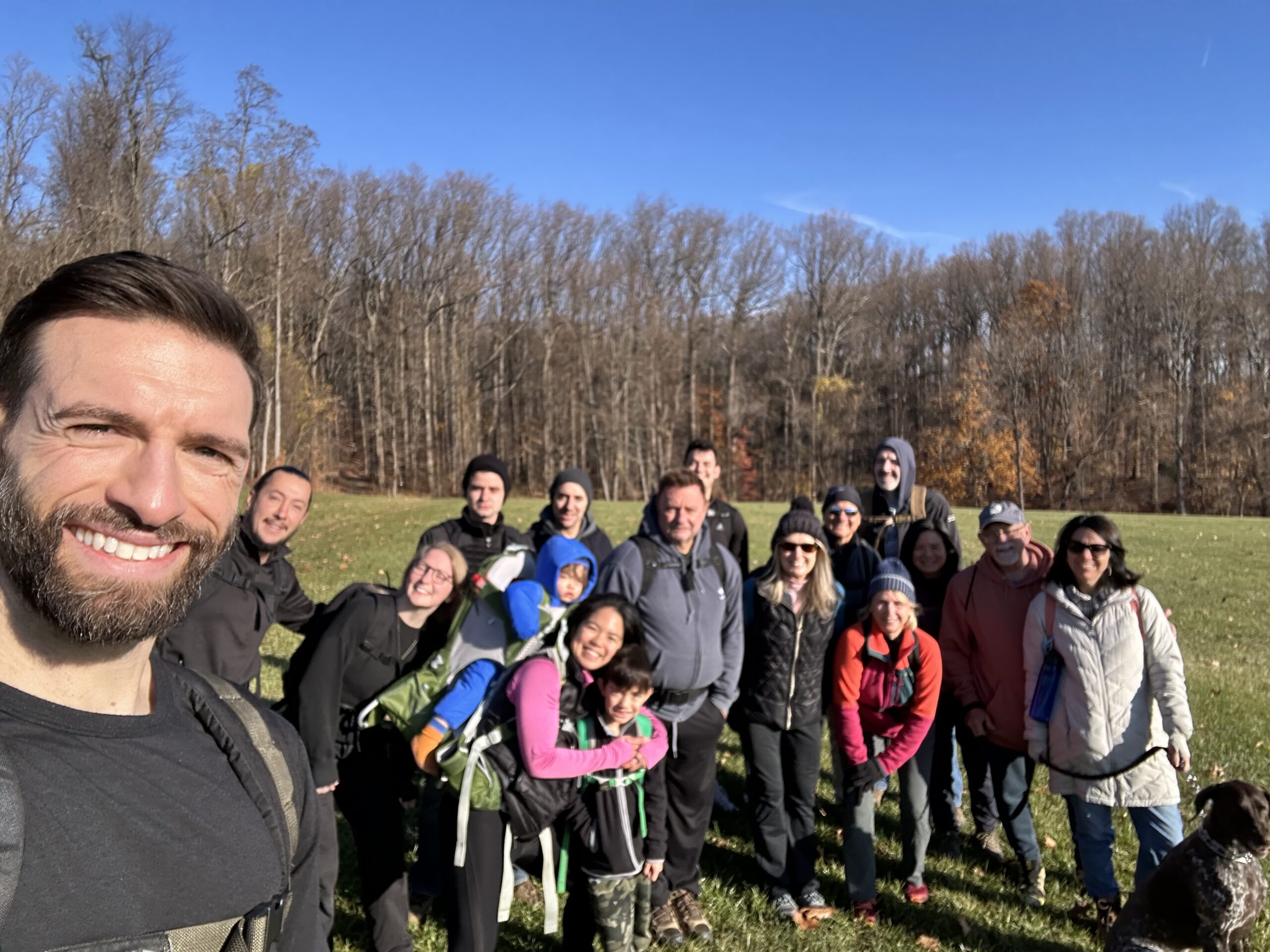
Every Wednesday at 9 a.m. for the past three years, I meet with the Longevity Ruck Club at Holmdel Park.
We walk the trails, get some exercise, enjoy the outdoors, and have conversations ranging from the intellectually stimulating to the absurd.
I see some of these people more frequently than my closest family and friends and the meetup has become one of the most gratifying parts of my week.
And I didn’t select Wednesdays at 9am by accidenct – the timing is deliberate: right smack in the middle of the workweek, when conventional wisdom suggests I ought to be behind a desk.
That standing appointment represents something I value enormously: the ability to integrate health, friendship, and nature into my ordinary life.
Not someday, when I’ve accumulated enough money or finally retired.
Now.
Yet in the excitement of a potentially lucrative business opportunity, I’d nearly lost sight of why I built this life in the first place.
I’d become so consumed with figuring out how to make the deal work that I’d neglected to ask whether I actually wanted what came with it.
So here’s a thought experiment:
The Ordinary Wednesday Test.
Imagine yourself five or ten years from now.
Not on vacation. Not celebrating a promotion, selling your business, or reaching some arbitrary net-worth milestone.
Just an ordinary Wednesday.
What time do you wake up? Who do you spend time with? What work occupies your day? How much control do you have over your schedule?
And perhaps most importantly: Is this a Wednesday you’d look forward to living?
It’s a deceptively simple exercise, but one worth considering when evaluating career opportunities, retirement decisions, financial trade-offs, or any of the countless choices that shape our lives.
Because every opportunity comes with costs, including ones that don’t fit neatly into a spreadsheet.
Ultimately, we (wHealth Advisors) decided not to move forward with the partnership.
I’m still ambitious. I still want to grow wHealth and build something enduring. And I recognize that the freedom + optionality I enjoy today was made possible, in part, by years of hard work and sacrifice.
But the experience reminded me of something I spend much of my professional life encouraging others to consider. Apparently, I needed a dose of my own medicine.
The point of building wealth isn’t simply to accumulate more of it. It’s to create the freedom to live a life you actually want.
My ideal Wednesday happens to include a walk in the woods with friends. Yours might look entirely different.
What matters is whether the life you’re building looks anything like the one you actually want to live.
So, what does your ideal ordinary Wednesday look like? And are the decisions you’re making today bringing you closer to it?